Developing theory and methods for evaluating the impact of community food initiatives on NCD risk, social and economic wellbeing and the environment. Community Food and Health (CFaH)
The majority of SIDS have high burdens of NCDs and rely heavily on low nutritional quality food imports.
Aim
The overarching aim was to develop methods and provide preliminary data towards establishing a research programme to carry out high quality evaluations of community-based food production initiatives in low and middle-income countries.
Activities
The project developed and tested methods to investigate the relationships between dietary quality and food sources. A qualitative 24 hour dietary recall was used to assess dietary diversity, supplemented by a quantitative ‘dietary screener’ for specific food items. A food source questionnaire was developed, including different types of retail outlets, own production, sharing and battering, and food aid.
In depth qualitative interview and focus group discussion guides were developed and implemented to explore factors influencing current consumption, and facilitators and barriers to increased local food production. Finally, a tool for assessing the impacts of food production on the local environment, and the impacts of weather events on food production, was developed.
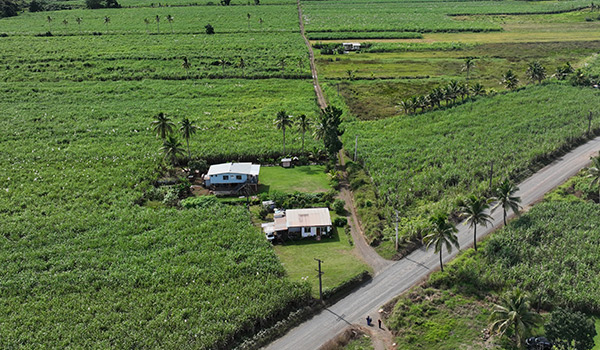
The work was undertaken in St Vincent and the Grenadines (SVG) and Fiji.
Outcomes
The key outcomes were the development of methods and initial population-based data from SVG and Fiji. These have informed the development of subsequent projects, particularly ICoFaN and Global CFaH.
Briefly, some of the findings include low levels of dietary diversity in both countries, and high levels of food insecurity, particularly in SVG where one in three adults were affected. Low dietary diversity was associated with purchasing food from a small shop. Higher dietary diversity with regularly sourcing food through food sharing.
Although local food production was seen as essential to improve population nutrition, local food producers felt poorly supported by government policies. Tensions exist between recognising the value of local foods and the social desirability of imported processed foods.
Outputs
Bhagtani D, Augustus E, Haynes E, Iese V, Brown CR, Fesaitu J, Hambleton I, Badrie N, Kroll F, Saint-Ville A, Samuels TA, Forouhi NG, Benjamin-Neelon SE, Unwin N, on behalf of the CFaH Team. Dietary Patterns, Food Insecurity, and Their Relationships with Food Sources and Social Determinants in Two Small Island Developing States. Nutrients 2022, 14, 2891. https://doi.org/10.3390/nu14142891
Guell C, Brown C, Navunicagi O, Iese V, Badrie N, Wairiu M, Saint Ville A. Unwin N, on behalf of the CFaH Team. Perspectives on strengthening local food systems in Small Island Developing States. Food Security 2022. https://doi.org/10.1007/s12571-022-01281-0
Guell C, Brown C, Iese V, Navunicagi O, Wairiu M, Unwin N, on behalf of the CFaH Team. “We used to get food from the garden.” Understanding changing practices of local food production and consumption in small island states. Social Science and Medicine 2021; 284: 114214. https://doi.org/10.1016/j.socscimed.2021.114214
Iese V, Wairiu M, Salili D, Naunicagi O, Fesaitu J, Walelenea JJ, Tigona R, Veisa F, Teva C, Ha’apio M, Vaike L, Tabe T, Keremama M, Bird Z, Roko N, Unwin N, Guell C, Haynes E, Hickey GM, Krishna D, Hirdesh, Frances J, Kiran S, Tuiloma J, Tikai P, Reeves T, Ugalde D, Patolo S, Halavatua S, Hoponoa T. Impacts of Covid-19 on agriculture and food systems in Pacific Islands: Evidence from communities in Fiji and Solomon Islands. Agricultural Systems 2021; 190:103099.
Haynes E, Bhagtani D, Iese V, Brown CR, Fesaitu J, Hambleton I, Badrie N, Kroll F, Guell C, Brugulat-Panes A, Saint Ville A, Benjamin-Neelon SE, Foley L, Samuels TA, Wairiu M, Forouhi NG, Unwin N on behalf of the Community Food and Health (CFaH) Team. Food sources and dietary quality in Small Island Developing States: development of methods and policy relevant novel survey data from the Pacific and Caribbean. Nutrients 2020; 12911);3350.
Haynes E, Brown CR, Wou C, Vogliano C, Guell C, Unwin N; Community Food and Health Project. Health and other impacts of community food production in Small Island Developing States: a systematic scoping review. Rev Panam Salud Publica. 2018 Dec 17;42:e176. doi: 10.26633/RPSP.2018.176
Partners
- MRC Epidemiology Unit (Lead)
University of Cambridge, UK - European Centre for Environment and Human Health
University of Exeter, UK - George Alleyne Chronic Disease Research Centre
The University of the West Indies, Barbados - Faculty of Food and Agriculture
The University of West Indies, Trinidad and Tobago - Pacific Centre for Environment & Sustainable Development (PaCE-SD)
University of the South Pacific, Fiji - School of Geography, Archaeology and Environmental Studies
University of Witwatersrand, South Africa - John Hopkins Bloomberg School of Public Health
John Hopkins University, USA
Civil Society Partners
- Secretariat of the Pacific Community
The Pacific Community, New Caledonia

Funder
Medical Research Council (MRC) Global Challenges Foundation Award [MR/P025250/1]